
What Makes an IP Popular? Lessons from Comic-Con for Theme Parks
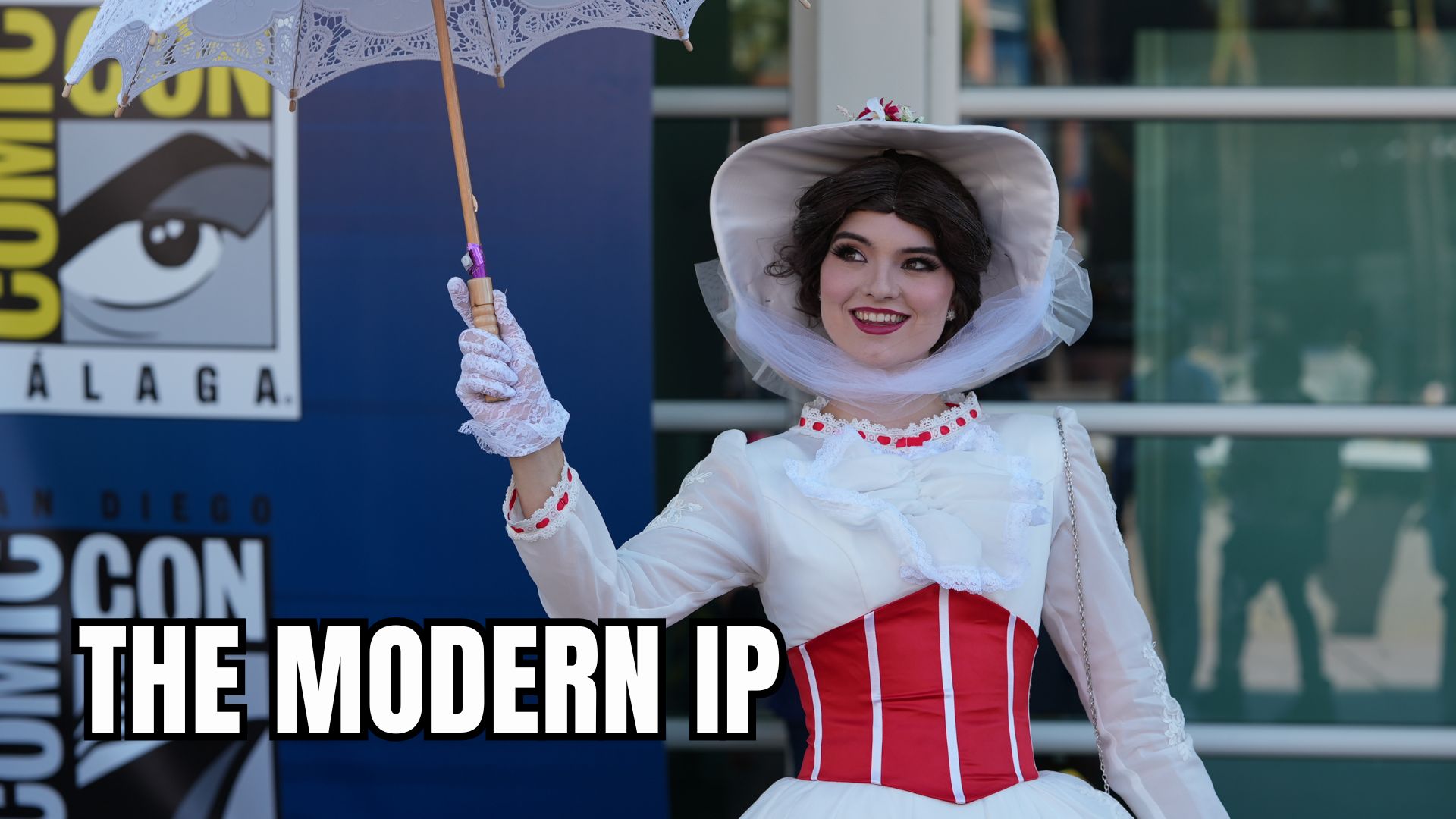
What makes an IP popular today? It’s not just the box office or streaming stats—it’s the fans who show up, dress up, and wait five hours for a free experience.

 Apple Podcasts

 Spotify

 Castro

 RSS Feed
What makes an IP popular today? It’s not just the box office or streaming stats—it’s the fans who show up, dress up, and wait five hours for a free experience. At San Diego Comic-Con, Percy Jackson, Alien, and K-pop Demon Hunters proved that passion, not just numbers, powers IP. Philip and Scott break down why pop-ups are becoming the new focus groups, how activations create the data stories that boards and licensors want, and what theme park professionals can learn from the way studios test, validate, and launch IP in the wild. If you're pitching an IP partnership or designing a seasonal overlay, this episode is your blueprint. Listen to weekly BONUS episodes on our Patreon.
0:00 Okay, from our studios in Los Angeles and Tampa. This is Green Tag Theme Park and thirty. I'm Philip. I'm joined as always from my co host Scott Swinson of Scott Swinson Cray Development. On Green Tag, we look at the week's top news and explain why it matters to business professionals in the theme entertainment space. And this week was San Diego Comic Con, and so there's lots of talk of IPS floating around everywhere. So we thought we would say. What what, Let's let's start by making a connection here because I'm sure there are some listeners going comic Con. Great is that this is not a that's this is a theme park show. Where are we talking about comic Con? And I think what Scott and I were talking about before we got on the show was basically theme parks. This trend of using more and more IPS is a big trend we've been talking about in theme parks. And the question is for a lot of the operators, how do you work with IPS? And what iypiece to work with?
0:49 And I think it seems like this very unattainable goal to a lot of especially smaller operators, And so we're like, let's link all these together, let's look at what's going on at San Diego concon and how that relates to IP selection. And yeah, so comic Con. I mean, I I have not been to San Diego Comic Con. I've been to several other comic cons and I've got another one coming up next week. But the the idea of going to a San Diego comic con that has become such. A massive event that it's not it's not just for comic nerds anymore, you know, I mean, it's it's so far surpassed that and you had a chance to experience it this week. Yes, yes, So what were some of the what were some of the hot ips and hot excuse me activations that maybe even looking for somebody to pick them up as an IP.
1:45 So comic Con is is interesting to give the context for people that haven't been because it's a little different than any other comic con. I go to a lot of conventions anime and comically in that whole fandom area, and Comic Con is definitely the most unique, And if anything, I would say it's unique because of the ips exactly what we're having this conversation, and sometimes sometimes I think comic Con isn't for the attendees. It's for the film studios and the press, and which is very different than a regular convention. So many of my friends who are congoers have said the exact same thing. They're like, we don't even feel like we belong here anymore. Yeah, it's very strange. It's I went as credentialed media.
2:29 I was reporting on comic Con for a traction's magazine, and we focused primarily on the activations, so the themed environments, so it's exactly what we're talking about on the show, like the theme how do you worlds you're walking through? We're not. I didn't report on any panels except for one to two of them, and we really focused on the things you could do in person. And that's what makes any o'comiccon so unique is that when you look at the attendance, it's maybe only one hundred and fifty thousand people, which is not massive from the Anime Expo is supposedly four hundred thousand, so this is like not close to that, except that counts the people that are going into the convention, like the badges that are going into the convention center. But with San Diego Comic Con.
3:16 Most of the convention is not at the convention, it is in the like I would say four blocks that they closed down. So every hotel, every store, every space you could possibly put something in a studio has come in with an IP and turned it into a themed environment. So in Indianapolis, gen Con did the same thing with every surrounding hotel, every ballroom, even the indoor. Stadium, everything everything literally And the thing is you don't need badges for most of these, right, they're just activations. Even they build so Disney Entertainment studios. They had four activations this year and all of theirs were just outside on the waterfront or in the park nearby, and they just put up walls and they just build an entire so basic experience backing.
4:01 I mean, there's ay they've got. They know that there's going to be a huge influx of their target audience, and there's a lot of media attention, which I think is probably more important than the influx of target audience. And it gives them an opportunity to set up, you know, to set up their platform, to set up their soapbox, to pitch their next great concept idea. As long as it's loosely related. It seems to fit in. I guess, well, so, no, that's an excellent thought. So I was having this discussion with a few people about kind of what we're all doing here. It was a little weird meta discussion, right, because some of us were in line for the fandom party and it's kind of why are we all here? Like what is the point of all this? And it's interesting, Like I said, I think it's for the studios and for the press, but it's interesting when we look at it in the IP lens because you know, recently there was that I don't want to say complaint, but there was some of those articles about Pixar and Disney of being like, well, if you want to more original stories, you need to go support them in the theater. Right, there was a kind of like the got negative press for that, and then there was a kind of argument of well how much marketing do you put behind it? So then it gets you to think what actually makes an IP popular? Is it the story itself? Like is it a good story of telling the story? Or is it the marketing that is put behind it? And when you're there at Comic Con, I think you really see all that really starkly represented because the people that put the money behind the EPs,
5:35 that's where you get it. So it's not necessarily i think, a question of the IP itself or even the fans of the IP. It's it's like that that's there, but it's also the shiny object thing like how much money they're going to put behind the activation, how cool it's going to be to do the thing itself, that kind of drives it. So for example, Percy Jackson, so the ones that Disney did. Disney did Avid Elementary that it can of the Hill, they did Percy Jackson, and they did Alien. Okay, Abbot Elementary had the whole area with the ferris wheel. They made a whole block party where they gave away lunch boxes where you could go get your lunch box engraved and then they you'd go pick it up at Lost and Found right, so they would call your name, Oh, you lost your lunchbox and here's your name's on it. Right. They did a custom caricatures, or they would transform you into a character from Abbot Elementary and put you onto a poster. They did free shaved eyes. All these are free, by the way, everything here is free that's another reason why they get so many people. Everything all these activations are free and they're open to everyone without badges or with badges either way.
6:35 So that's a lot to do for Abbot, right, But the popularity of the Abbot experiences was much less than that for the Alien or for the Percy Jackson one. But Percy Jackson, they're giving away either a really nice water bottle, like, you know, very nice, a very nice water bottle, or a really nice cap that you get and you get to go the whole experience where you get to do a personality quiz and be chosen by a god and interact with the fates and interact, you know, have a whole interactive experience. And then in the Alien you get to walk through the entire wreckage of the ship like from the movie, right, and then walk through the ship hallway in the dark where creatures may or may not come out at you. I mean, come on, so when you kind of when you weigh these and so just also for some points here, the Alien experience was about a four hour wait and the Persigestion experience was five hours. But then they had to shut the line down, and so you show up in the day and we were and the press. This is the only reason I went to tell you about it, because press got our own time to go in. But I was talking to some of the regular people in line, which I like to do to get a sense of and the person who was front in line to get in for the first general attendance for regular people on Thursday said they had driven all night just to come to get in line for the Percy Jackson experience and they have been waiting there literally all night and all morning
8:06 to be the first regular guests to go in. And so, yes, Percy Jackson, there is a huge fandom for it. You can tell you that's what I mean. You can sense that. But maybe some of the other ones it's just because you get a bunch of free stuff and it's really cool. So it's it's kind of I think, figuring out where the passion line is. And then it gets back to the IP thing we just talked about, So like, how much have you really seen for Percy Jackson. How much promotion? I haven't seen. There's no Percy Jackson theme park. Well, but I will go. I will go, So putting on my putting on my corporate hat, it's like, you know, to answer that question, why do they invest this kind of stuff? Not just why are we here? But or why were you there? But why do they invest this kind of money and time and effort into these kinds of activations. So it kind of goes back to what I believe was Malcolm Gladwell who referred to people as sneezers, the people who are so excited about a brand, so excited about an IP that if you tap into that, you'll be able to get them to spread the enthusiasm organically about your IP significantly faster. So if they get their their lunchbox from Abbitt Elementary, or they get their wearing their cap from Percy Jackson, they somebody will say, oh, where'd you get that cool cap? And they immediately will gush about the experience. So that's that's exactly what this.
9:21 So that's one of the things they will They're targeting their their core core audience to get organic because if you can get I mean, and you know this far better than I do, Philip, if you can get organic growth that Trump's paid media time and time again, it just expands exponentially. So you want to get the right people excited about your brand, excited about your IP and and you're right, we haven't heard a lot about Percy Jackson. So is this a way? And I will promise you that the amount they spent on that activation is significantly less than had they done a nationwide television spread of advertising. Now, did it reach a wide and audience, who knows? But did it reach the people who can organically spread it like little veins of a tree. Absolutely. The other thing that is very beneficial in these kinds of activations is they can get data. Now, we all know that data can be used in any way you want it to, but you can say, you know, there is such a such an impact, such an interest in this brand because at at C Diego Comicon, we saw x number of people in our full capacity was this We were at full capacity, People were weighing five hours in line. This sounds really impressive to investors, This sounds really impressive to people who who want that that uh you know, yeah, well why are we putting money in this or why should we extend this? So if you've got some of that data, which you know, granted is a bit a bit skewed, you know, no one's going to wait four hours to see any of these things, any of these products in line, you know, So it's it's no weak,
10:56 but it does give them, it does get It gives them data points, and it targets the people who going to talk about their brand the most. I want to say data points with a story, and I think tying it back to our listeners, that is something I think you could tap if you could tap into that when you're trying to pitch your idea. So if we think about it, it's the same. These are gonna be the same questions that our listeners would have to answer if they were pitching someone to put some sort of IP partnership at one of your attractions. The data question, how do we know this is going to work? How do we know people are going to show up to it? How do we know the money spent in investing the IP and then building the thing is people are going to want to do it? And to Scott's I think Scott of what Scott was saying, like, I think my argument, because I'm a peer data maybe not a pure data person, but my argument has always been you could just look at the numbers, right, Like my argument would have been we should know based off of the amount of numbers that we have for it. But I think something what Scott is saying, It's like when you can tell them here are the numbers, but also here are pictures of fans all over SOT media who waited the story I just told you about Percy Jackson. Right.
12:03 I could see somebody saying that in a boardroom, this is why we should do a Percy Jackson experience at our attraction, because look at the fans that came out to Comic Conlan. And even though in my brain, even though so my little brain is like, I mean, but if your theme park is in Tennessee and this is in San Diego, you're not necessarily gonna get the you know. But it's about the story, about showing the passion behind it. And that's and that's exactly my point saying that the data can be used to say anything you wanted to. You know, you can. You can take that data and say we were sold out one hundred percent, and then you can flip that data if you don't want to do it, you flip that data on its head and says this is really popular in California, but this is not going to fly here in Iowa. You know, exactly. Yeah, So you know data, data is something. This is where Philip and I, I won't say disagree. We both recognize the importance of data. But I'm I'm a lot more.
12:56 That's the word I'm looking for, suspicious regarding data, because I have i'veen data used over the years. I've seen data used to say things that weren't necessarily accurate or true, or didn't come to be true because they were able to take the data frame it in a certain way. You know, the data only works if you understand the full perspective, if you understand where it's coming from, in what world it's living in. So but with something like this, you can use this data and you can use these stories. And you're right, Philip, the photographs are essential when it comes to pitching a new idea. If you could say, look at the enthusiasm, look at the excitement at comic Con, and of course I would be the one sitting in the back. Excuse me, do you have anything like that at a shopping mall, because comic Con is targeting this audience one hundred thousand percent.
13:42 Yep, exactly, exactly. Well, and you know when you were talking it was interesting thinking about the data. I think that the best thing and I think we I had this conversation with somebody, a reporter from Collider. Parts of this conversation with reporter from Collider in line for the fandom part, which was just I guess, like a giant party to like just be excited about fan things, and it's yeah, I was like, is fandom well? Also, I mean the All American Rejects were playing also, so that was part of it. But you know, I didn't say that because I'm old, but and I was tired. But they don't do a bad show anyway. Ahead Yeah, yeah, But so it's the idea of the of testing. And we were talking about how Disney needs everything to be perfect and that they can't They almost can't afford to launch a movie or a thing that is not gonna do well because then they're under a microscope, and so they're so conservative with what they produce. And he was talking about how Netflix can make bets much wider because they're under less of microscope. And basically he was like, you could have all the data, you could see all this data, but like you still need to test it, and the best thing to do is to do micro tests is what we were talking about. It how do we do micro tests? And it's like, how do we do smaller, smaller testing to then get to you know, solution And he's like, well, Netflix is able to produce so much faster so they can get to a hit faster, and Disney has to do so much
15:14 and find so there's like there's so much discussion about it because they can't afford to fail. He's like, and that's the problem is because there's no guarantee with this kind of stuff. And I'm like, I agree with that, and I think even in for our listeners. That's also another takeaway is what type of testing can you do to take the data and validate it in your region in a smaller scale if you can, or then and then expand it and expand it, expand it from there. And yeah, and we were talking about and what I guess my point was YouTube can do that even better because on YouTube, that's what you see. You see all these individual people who are putting out content, and then you figure out YouTube itself figures out what content you know is the best because they have so many different sources.
16:01 And an example I was saying is like look like to me, the runaway hit of this whole month is K Pop Demon Hunters and they're nowhere at Sandigo Comic Con. But Capop Demon Hunters they went. Saying they went viral is an understatement. I mean, every human that's under it in a certain age range is talking about this show and it's absolutely like it is. It's bonkers, Like the fandom for this show is bonkers. And again, it's just one of those things that Netflix put out and it just completely came out from less field, and you know, it should have been at comic Art. It should be, it should be somewhere it should be, doesn't or.
16:45 It doesn't need to be at comic Con because they've already they've already been a tested it and it's already flying. It's the things that they it's the things they need to test. It's the you know, I replace I guess my point is replaced focus groups with pop up experiences. You know, Oh that's a good idea because because focus groups are outdated and take too much time, you get real you get real time, real time feedback. And you know, you talked about how long it takes to produce and how Netflix can produce. Netflix can produce things so much quicker. I mean, a perfect example of that is and I'm not gonna I am not gonna get political on the show, but South Park they you know, they can produce. They say they can produce shows in five to seven days, so they can be very topical. They can be bleeding edge when it comes to the topics that they're that they're talking about, and that means that they're going to go very quickly with with uh K Pop Demon Hunters that you just mentioned, I am clearly not in that age demo, but it's even it even pops up as like number four on my list of what I should be watching when I turn on Netflix. Uh and and apparently it's it's again the algorithm, which I couldn't possibly understand, but it's everything from sci fi to you know, the Korean films that I really liked, the animation. I love animation, so I watch a lot of animation, not necessarily that style, but it's it's feeding in all those little little tendrils of information. And so I guess my point is, you're absolutely right. If it's if I know in my you know,
18:19 my septagenarian age bracket, if I'm familiar with with Capeop Demon Hunters, it's got to be big and it's got to be blowing up in the in the right demographic. Yep. And I think I like the idea that you just that you said too about testing it, So like, can somebody do a test experience with something like Keepop Demon Hunter look at this trend, do a test pop up or do some sort of pop up test of a thing? Figured it out? And even back to the examples, if somebody is waiting four hours, if you have people that are willing to wait four hours to walk through an alien wreckage thing, that could be a good haunted house. I mean maybe people would pay for it, and you know, so then the question becomes would someone have paid to skip that line? And then you would know that you have a like a business mind.
19:05 And the next question is you have to look at would some of paid to skip that line? Number one? Number two? How much would we have to pay to get that IP? Because you have to have that IP in order to get people to want to wait four hours, you know, And and I think it's a I think Percy Jackson is a really good example, especially comparing it to K pop demon Hunters. The reason Percy Jackson is there. It needs sneezer, it needs people ausiastic about the brand. Again, it's it's a It's one of those brands that, in my opinion, from my perspective, never really popped through as a major player, but was always there. You know, it's been it's it's been been around for a while. It's been around for a while. It's been films, it's been there's a musical on Broadway, or was a musical on Broadway.
19:48 There's a lot, it's it's taken many forms, but it's like they haven't quite hit their niche yet. So again, a pop up like at San Diego Comic Con is a perfect opportunity to kind of refine tests, see what works, see what people like. Are they there just for the free stuff or is that just the way to get them in the door. You know, there's a lot of there's a lot of opportunity there, I see, and a lot of organic opportunity. You know, I would if I were there and I were part of that project, I'd be watching every moment. I'd be talking to people as they came out, I'd be watching, I'd be I'd have cameras throughout the whole thing, figuring out where people are happy, where they're lingering, where they're moving forward, you know, all of that, all that would be so part of it.
20:31 It's it's fascinating to me, and I'm I'm excited because, like I said, I'm speaking at Tampa Bay Comic On or Tampa Bay Comic Convention August. I'll be there August third, And I'm curious because it's not nearly the hugeness of San Diego Comic Con. But what's interesting to me is the celebrities that are on the list. They're having everything from pretty much any there's I can't think of a single animation studio that isn't represented by voiceover artists, so they have all of the animation voice artists and then they're having a Happy Days reunion. Henny Henry Winkler, Don most Anson, Williams are all going to be there. So it's it's kind of what we're talking about, I think is that they're kind of sort of dipping their toe into gosh, is this going to be of interest to this group or maybe we need maybe maybe they're looking at it going we need a we need an older crowd, they're more likely to spend money on vintage and nostalgia than a younger crowd. Is I don't know, but we'll we'll talk about that after I go. But it's I think these conventions I guess My point is these conventions are a great opportunity to do some really good market research with a target audience.
21:52 Yeah, I think if you're doing it correctly, I think what you're saying is right. I think again, it's all about the data, caption the data, paying attention to what going on, and for our listeners, also paying attention again to see what people are again, what experiences they're excited about. I think is is that's why I always like to go with the experiences to figure out and like what you're saying so really quickly, just to list the other things for our listeners so they're aware and maybe they could go look search up some of these videos. I didn't experience all these personally, but some of the ones that were very popular. The Predator bar. They had a bar experience with predator and they had like a little stage area where the predator would come out and kind of do predator things and whatever. So yeah, I don't know, but.
22:36 You're to do predator things. I don't know. I saw some videos of like, okay, there was some alien language talking. I don't know what's going on. Maybe it was like last Call guys kind of thing. But but so they got obviously the alien thing was was huge, and they did a day version of night version. The King of the Hill was more popular than I expect did Ashley, which again it's showing the research here because they're rebooting King of the Hill, and so they had it was all set up for the next generation of King of the Hill, and they had you could go and you could get Alamo Waters, you know, so instead of the beards of water can. I mean, it's really they had some of fun moments that you could recreate. And then obviously Bobby's all grown up now, yeah yeah, yeah. Uh. My favorite line that they kept playing over and over was like I don't know if I can kick your ass through Zoom, but I'm gonna try. It was it was good. Uh. Then they had the Lodge paramount set up like a Dexter walk through a little walk through his Vault type of experience, and they had a few other things that seemed not to have not as much trash. But I think some of the random runaway hits people weren't expecting. The pac Band Cafe. There was a pac Band cafe. All oh my god. That but again we talked about this too.
24:04 But like the idea of pac Man food and themed noodles, I mean all these I mean people just went cars. People love food, and then it's pac Man. You love pac Man and food and you get to eat it. It all fits together. They had a meeting greet with a little pac Man character that was went wild. It's like it's like the butter Beer bar, you know the butter beer caps in the various Harry Potter stores. Because there's so many. There was a Magic the Gathering experience where they recreate they're doing the Magic Gathering is partnering with Spider Man for their new set, and so they recreated some of the town from the new from the comp book from New York, and you could go and you could go the Daily Bugle and pick up a paper, and you could go into the desk and take pictures and all this so that there was those fun experiences. And then the Twisted Metal brought bumper cars that were kind of like looked like the cars so you could play do bumper car experiences. And then you know, there are some smaller horror ips where they just had horror characters that the strangers, you know, or things like that where the characters just kind of roamed around areas.
25:06 Those got popular. So there are so many. I mean, it's every corner you look through, but those are the ones I thought really broke through the noise that we kept seeing people kept saying the wait times were just insane on for those. Well, so basically I think for our listeners, one of the key takeaways here is you may think that the comic cons or the pop culture conventions are something that really doesn't directly tie to what you do, but they really are. You should go and check them, see what people are excited about, and also learn how to handle crowds, because that's another thing that they have to do, and you'll in some of them, I won't mention any names, and some that I've been to they have no idea how to handle crowds and it's a cluster. And in others they're excellent handling crowds and it makes for a very exciting and connected experience. So go out and check them out.
25:59 That's that. That's the most important thing, I. Think, and the last example I'm gonna have that's gonna probably tile this together. So I went to a panel for The Dragon Prints and The Dragon Prince was written by the same people that did Avatar the Last Airbender, and so it's kind of like it's very similar in every like in theming, you know, it's like coming of age of animation. It's all in terms of the same demographic, the same themes, it hits all those same things. Okay, so the dragon Prints ended, it got picked up by Netflix and ended, I don't know a while ago, and the panel was basically they were just talking about a new announcement, and so I went to the panel to see what it was all about, and they put them They put it in Ballroom twenty and so that's about five thousand people, and it was it was packed, I mean, it filled up for that and they basically announced that they were they had written and developed the next series, which would be The Dragon King, which is a continuation of the Dragon in Prints, and it was going to be involving some of the voice actors from Avatar Last Airbender.
27:04 So Zuko is going to be in there playing the Dragon. I mean, there's so they had the voice actors on stage, did some fun stuff. But here's the whole thing, the whole point. And I didn't even realize this how I was in it. The whole point of this panel was to get people signed up for the Kickstarter to get the funding to produce the series. And You're just like, this is insane that it's this popular of a fandom and they need to get people in the Kickstarter. And he did even mention on the panel. They're like, we just we need to be able to prove to the executives that there is there's enough interest to invest in this and this is what it's about, and this is why we need your help on the Kickstarter. And I'm like, this is crazy to me. You're just like, this is crazy because Netflix has the numbers, and they could just look at the numbers. What is Avatar? What is the Dragon? Prince? Like, they have the numbers, but they still need to.
27:54 But they've got the room somebody sitting on their board going yeah, well these number are four years old or three years Yeah, I don't know what they are still good, right, right, right, right right? So and so yeah, they're there and they did a whole and but again it was smart because they did a whole cosplay incentive where they were like, they invited cosplayers and they're like, if you have a good cosplay, we're going to give you these like cool buttons, you know, when you show up to the panel. And so they packed the panel not only was super fans but also with super super fans who were dressed as the characters. And then they had camera people there getting videos of all the cosplayers of everybody showing their fan their love of Avatar and the dragon prints and I mean it was like it was a whole thing. But to your point, it's all to tell the story behind the data.
28:41 Yep, it's it's a dog and pony show for the executives. Ends up being let me rephrase that, it provides the material for the dog and pony show for the executives. Because if the executives, and again I'm so jaded about this because I've been through it so many times, but if the executives were to show up at the actual panel, which they probably wouldn't, but they would go, well, look, none of these people would ever spend any money on this stuff. They're not the ones making the decisions. However, if you show video of people dressed as their characters and acting out their characters and using lines from you know, the brand and the IP itself, the boring executives who are sitting there with their arms crossed can't fight that too much. You know, you've got you have just proof.
29:25 And then you see the numbers that are signed up for the kickstarter and it's just like, oh, okay, so I guess there is actually sometimes you know, it's funny. Sometimes studio executives their job is to shoot things down. Yep. Their job is to say, here's why this won't work, and this is a great opportunity to get material that will counteract that thought. Yeah, and great, great, I think takeaways also for the audience to think about, Like that's similar to what we're doing at the park level as well, is to be pitching and showing that there is passion behind it and that people would invest and that guests would spend the money and go and participate in the activity.
30:07 Yeah. Every time I do a new project, I have to show I have to show pictures. Here's the kind here's the kind of thing we're going to do. Here's the people who are going to it. Here's how popular it is, and and then we have to go from there. So, uh, anyway, utilize these conventions because you don't all have to go to the biggest in the world, go to the smaller ones. If you're in the Tampa Bay area, come by say hello at the Tampa Bay Comic con Comic Convention, it's August first through the third. I'll be there on the third and I'm doing a whole session on interactive entertainment and how it's growing and evolving, so which you'd think has nothing to do with the comic convention, but again, it's expanding, and it's it's embracing what we think of as live entertainment, what we think of as theme park, what we think of his immersive experience. So it's, uh, it's a whole show, and this has been a whole show about this because we're out of time on behalf of Philip. This is Scott Swinson. This is Green Tag Theme Parking thirty and we will see all of you next week.

For over 30 years, Scott Swenson has been bringing stories to life as a writer, director, producer, and performer. His work in theme parks, consumer events, live theatre, and television has given him a broad spectrum of experiences. In 2014, after 21 years with SeaWorld Parks and Entertainment, Scott formed Scott Swenson Creative Development. Since then he has been providing impactful experiences for clients around the world. Whether he is installing shows on cruise ships or creating seasonal festivals for theme parks, writing educational presentations for zoos and museums or training the next generation of attractions professionals, Scott is always finding new ways to tell stories that engage, educate and entertain.

CEO of Gantom, Publisher of Haunted Attraction Network
Philip is a journalist reporting on the Haunted House Industry, Horror events, Theme Parks, and Halloween. He is also the CEO of Gantom Lighting and Founder / Publisher of the Haunted Attraction Network, the haunted attraction industry's most prominent news media source. He is based in Los Angeles.