
Six Flags Presses “Reset”
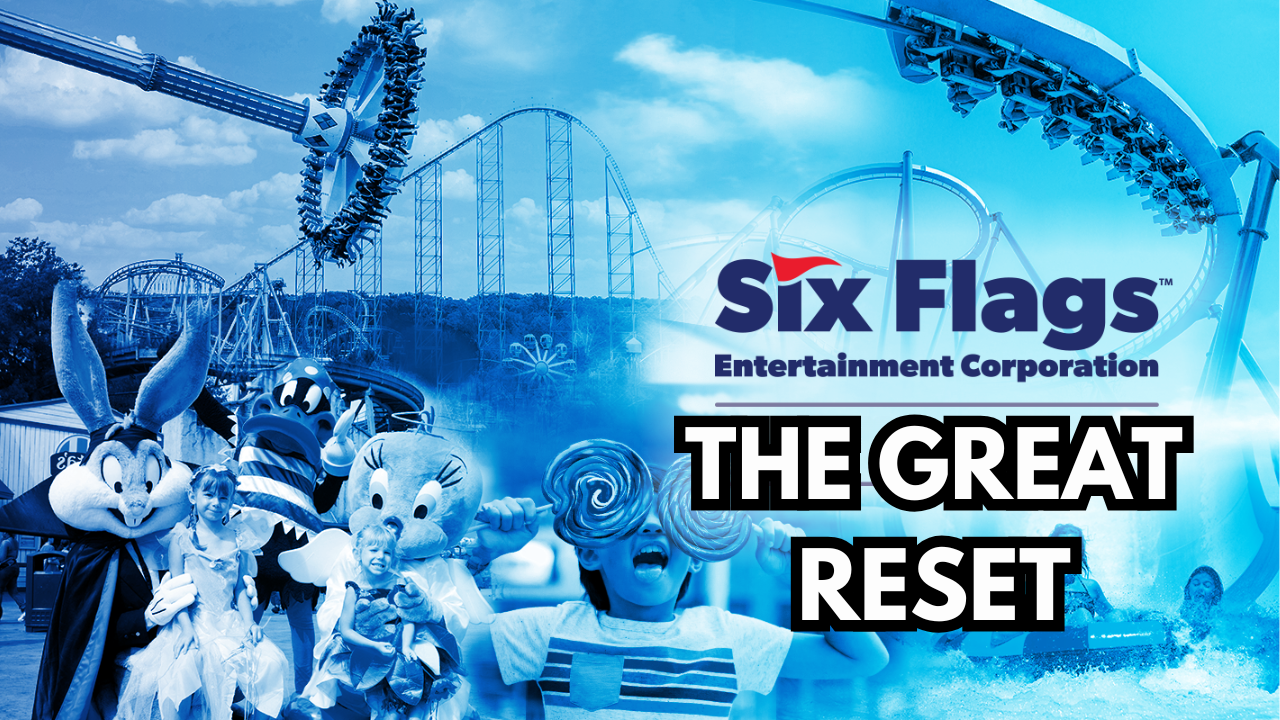
"The Great Reset," Six Flags' new strategic plan, aims to reach 58 million in annual attendance and $3.8 billion in revenue by 2028.

 Apple Podcasts

 Spotify

 Castro

 RSS Feed
"The Great Reset," Six Flags' new strategic plan, aims to reach 58 million in annual attendance and $3.8 billion in revenue by 2028. The 88-slide presentation boils down to one thing: a better product makes more money. The plan gives concrete examples of what industry professionals have known for decades—improving the guest experience means guests will want to come back and spend more, convert to annual passes, bring their friends, and grow market penetration. And Six Flags has laid out an excellent plan, complete with benchmarks, examples, and research. But - can the newly merged mega-chain deliver? It sounds simple, but executing doesn't always work out. Plus: why Falcon’s Beyond buying Oceaneering tips the turnkey arms race, and what IAAPA’s board thinks about staffing, storms, and tariffs. Tune in—then catch the gloves-off debate in Green Tagged Unhinged on Patreon .
0:00 Okay from our studios this week in Los Angeles and Tampa. This is Green Tagged theme Park and thirty. I'm Philip and I'm joined as always by my co host Scott Swinton of Scott Swinston Creed Development. On Green tag we break down the top theme park news each week and explain why it matters to professionals. And this week, of course, we have to talk about the Great Reset from six Flags. I'm sorry you've. Been a way too many grand openings recently. I don't know you had to do like, you know, jazz fingers and we'll do a drone show over the top Reset. Oh my god, reset everything today. Six Flags near you the Great Reset.
0:41 Everything needs a name. Yeah, yeah, everything needs a name. I'm sorry, I'm not dissing it. So let's get into this story. So basically, on May twentieth, six Flags hosted a day long investor day, and as part of this investor day, they unveiled a strategic plan and like this, this is what I've. Been waiting for. Actually, the thing is though it was about two and a half hours long, which is this eighty eight slide presentation going through all of the plans and case studies and all this. It's it's fascinating material. I did not have time to watch the entire web cast, but I will before we release our newsletters, so just you know, I'm like, so, I'm like processing it, okay. But I did go through the entire slide deck and I read what some of our other colleagues said about it, and they had some really great insights on there, especially Tyler Rizzo on LinkedIn there's just some and of course Scene Parkingsider and Attraction Magazine there's.
1:39 Some great stuff about it. So, in other words, you've done more research than almost any other media person who's reporting on this, but you still haven't watched it. I'm getting to it, you know, and cause I got to make sure that everything is one hundred percent right, because for. Those of you who don't know Philip personally, this is exactly the way he is. If Philip says something, you can pretty much believe that he's got as much data. No, he's got a spreadsheet to back it up. And even if it's just gosh, you know, my favorite kind of coffee is this, he'll have a spreadsheet on it. So when we were talking about it before the show, he said I haven't, but I haven't watched it, and I don't know whether we should do it. And my feeling at the time was, Philip, I trust the fact that you have viewed the whole presentation, you've read other commentary.
2:30 I trust his semi prepared better than I trust most people's fully prepared. So although I think it is important to give this caveat, I think it's also important for you all who are listening, who don't know Philip personally, to recognize that this is we're not going to say anything on here that's going to be so completely off. There may be something you disagree with, There may be something that we don't represent in a way that is the way we are intending. But I can promise you that pretty much everything we're going to say here is pretty darn close to fact. Okay, So moving on this and where. We can, of course, we're going to be pulling from the slides directly of the presentation deck directly, and I will try and put those images in the YouTube version of this so that you can see that. But if not, if you're listening to the podcast version, you can go to the link in the show notes to download the eighty eight page slide deck if you want to.
3:26 Which but why that's really kind of the purpose of the show, so you don't have to, you know, that's the reason. There's pretty pictures. Okay, okay, if you if you are a data nerd like Philip, you can download the eighty eight pages or you've just listened to this half hour. So actually I'm gonna pull from Tyler Rizzo here who posted this on his LinkedIn, and this is probably the best summation of the entire thing, which is surprise, Surprise, happy guests or turn more often. I think that should have been the title of the plant, because okay, this is let me just say, this is a great plan. Going through the slide deck, I found nothing that was out of step with the industry as a whole and with trends, and it's just everything in here is like, it makes good sense. I have flashbacks the last time we talked about this kind of thing, where it's like, now can they execute on it? Which is I think the main question. But in terms of the strategy, like, I think it's a great strategy. Everything here makes sense.
4:30 It all. If you believe they're telling the truth. That it all, it all tracks and I think that the highlights for me was how they they did kind of admit or point to areas. You know. It wasn't like everything is sunshine and rainbows, you know, which can sometimes like what did the Disney one where they're just kind of like they're, you know, plastering over the softening market in China and distracting you with other things. I mean, this was like, this was like, look, here's all all the parks, here's all the properties. We might change more stuff. We're going to cut people and labor and costs, and we're going to trim down. But they also looked at said, look, we have underperforming parks where there are parks in markets that should be doing better based off of how our best performing parks perform and the market penetration percentage. And basically they're like, look, here's big markets. We have parks in these markets and they should be penetrating more and they're not. And we think the reason why is because the guest experience is not good at those parks, and what do we mean by guest experience? They actually broke it down for us and they're like, this is what we mean by guest experience, you know, we mean the.
5:46 And they put it out. They put a little chart here, but they're basically like, how can we improve the guest experience, expand rights per guest, enhance quality and availability of in park revenue offerings, thrill, family of water, rotation area development, family family entertainment, and of course seasonal events that drive season pass value. And they talked about how season pass value is an enormous part of their plan. And there's even slide about the potential about any potential downturn in in the recession or recession economy, that kind of thing. There's a slide about that. And basically the argument is if we can get guests to come back and encourage them to get a season pass, then that will help us no matter the environment, even if it's recessionary, because people want to come back because they see value in it. In order to do that, we need to make sure that all these things are good, like actually good food and beverage that doesn't rip off guests, you know, making sure that the rides are operational, like capacity, all these creature comfort things, you know. Invest This is where they talked about the investment in the toilets, and I'm like, yes, like you know, all this stuff is here and it all makes sense. And I guess the question is didn't our investors buying it and are they going to actually execute? But it sounds like they're going to execute on their the California once first, Like they specifically called out Magic Mountain and they basically are like, you know, Knots is doing great, and we did great
7:16 things with Knots and Magic Mountains underperforming and it's and you know, and this is where it's my personal take. I never go to Magic Mountain. It is fifteen minutes away and I never go because the park, the guest experience is terrible. You know, it's like it's hot dogs that are eighteen dollars. It's like kids putting you into rides and not following safety protocols. It's like only one ride vehicle if that running, or they just shut down parks they don't have to. I mean it's every from from eightzy. Everything's terrible at that part. So they agree with you, So there, yeah. I mean one thing that I think is really important before we dive into this too much, is one thing I think we have to recognize is in essence. This is this is a brand new company with a great deal of expectation.
8:02 In other words, you know, we don't espid well, I don't. People in the industry don't. Investors don't know what this company is going to be all about. We've had a lot of speculation. We've done some on this show where we've talked about here's you know, if they can take this from one company and this from the other company and put it together in some magical way, then they can create something that's going to be successful. So I think part of the reason they went into such great detail to say something incredibly simple is is because this is the first time out of the gate. This is the first time as the new company they have reached out with a strategic plan, and so I think they have to kind of over in my opinion, they have to kind of over exaggerate the detail. They have to get into the minutia, and you know, I, like you, Philip, I kind of find that refreshing. I think that's a I think it's a wise approach. I think it is.
8:53 I think it is fair to say that they also are listening to what the perception, the guest perception is of some of their properties, and that is, like you just mentioned with with the Magic Mountain that it's it's a it's a crap hole. I mean, it's they're just not they're not living up to what they could be. And I think the fact that you know, mentioning that in a in an earnings presentation or in a strategic planning presentation is a very wise choice to basically say, you know, we recognize because if you come out to investors and say, oh, no, everything at Magic Mountain is great, all of the all of the rides are always open, and the food is is stellar, then they seem to believe, oh, okay, so this is what they think great is, and that's clearly not the case because they recognize it. So when they call out Magic Mountain by name, I think that's a very wise business choice, especially when you're talking primarily to investors. There are times that you have to break things down into such minutia so that you can recompile it into surprise, surprise, good guest experience, excuse me, equal sire, attendance.
10:04 I mean, sometimes you have to break it down in order to get to that. So you have to understand it well enough to make it to simplify it, and it sounds like, you know, and based on what I've read that you've compiled here, it appears as though that's exactly what they've done. Yep, they never said that, well, I don't think they said that. Of course I start to listen to the presentation, but I'm not sure they said it that plainly. But I think that to Scott's point earlier about like they don't need to. Speak they don't need to say it that plainly. Yeah, they just need to do it. If they say it that plainly, then it's it's then it becomes suspect. But if they just shut up and do it, which it sounds like they've done. And again, based on the language that I've read, you know, it sounds like that's kind of their approach. Yep.
10:52 Yeah, I think effectively they made they took us through I don't say, like twenty slides or so, or just articulating and proving that exact concept, which of course, again we know, I mean, we know. It's also nice to see somebody prove something that we know, because I think we take it for granted. But then, as Scott you like, how many means have you been in where you're like where they start questioning does quality really matter absolutely? Or they'll say the one that I get quite often is so how important is it really to have a marketable storyline for this event? You know, it's things that have been proven over and over and over again. And the thing I like about seeing this kind of of presentation is it shows that people very high up on the food chain understand that this is necessary. They understand that it's necessary. They are basically telling the people who are not in the industry, because let's face it, the vast majority of their investors are not in the attractions industry, and they're basically explaining to them, we understand creature comforts, we understand the new toilets, we understand affordable and quality food, we understand reliability of rides and attractions. You know, all of those things are things that well, quite honestly, some six Flags parks and a couple of couple of seater fair parks, but some of their properties have been accused of very negatively in the past. So the fact that
12:26 they are identifying them and saying here's where we have room for improvement, here's where we can grow, I think it's the right. I think it's the right approach based on what I've seen, because I have not listened to it either, but based on the charts and the graphs and the data and the commentary that Philip has put together, it appears as though it appears as though this is a smart choice, a very let's put it this way, it's a very grounded choice, yep. To basically, let's break it down to the simplest possible terms and then bring it all back together to say, hey, good park experience equals high attendance. Yep, yep.
13:06 And again I like even that they're able to show the graphs about it, which is. Well, of course you do, well, of course I do. But I think it's also important for investors to actually like they had the because these are people that not aren't necessarily from the theme park space. And I think you also have to explain and you have to show, like page thirty five has like this little arrow and the bubbles on it, and it's like, look like as guest satisfaction increases, the penetration in the market increases. And then they're like, so, look, here's all the markets were in. This is the size of the markets. That's our current penetration for those individual markets. And if you follow this errow and we're able to increase, guest has saction that increases And so it's I think they took us step by step, which I appreciate, and this is all culminating in their main goal here, which is also good like to also like all I mean this is I don't want to say this is like textbook. I mean, like we've heard before the concept of a big hairy audacious goal a b HAG. Right, that's a business concept and I think that's critical for investors because if you're able to say this is our b HAG, and this is also how we're going to get there, and this is proving what we're saying is correct, that is all what you're supposed to do. And their b HAG here is to say that the goal is fifty eight million in annual attendance and three point eight billion in revenue by twenty twenty eight, and they're saying basically like, look, if we're able to just increase our penetration in these markets
14:36 where we should have higher penetration by just this percentage, then we're going to be able to get to this goal. And how do we do that? Guess as action, how do we do that? Here are three pronged approaches, and then how do we do each one of these xyz right? And so. A particular note was the food because that was you know, so basically it's like three in order to to increase plantration, they need to increase guest ass fashion. They're defining guests has fashion by three pronged approaches, and of course one of those prongs is rights per guess, but also the food basically, which is they're in experiences and then there's Haunt, the Halloween stuff and the seasonal overlays, right, and then there's the family entertainment and those expansions.
15:20 And so. I thought the food was particularly interesting because that's kind of what Nots is known for. And that's the almost the biggest criticism with a lot of the other parts is that the food is terrible. And we know, as we've talked about on the show, stuff like this is critical because it increases spend per guess. So they're making both arguments, you know, They're like, we could increase transactions per guest if we made these things better, but also it increases guest hashashion, and I think that's true. I'm like yes, one hundred percent. We've been saying that. Good good things get more people to buy them. Yeah, which then also makes the people happier. It's not just that they you get their money, but it also increases their satisfaction. And I liked that they were arguing these dual points here, Like I like that they're like, this isn't just a revenue thing in terms of we make a better thing, so it sells more. We make a better thing, so it sells more, so there's a higher margin. So also, guests are overall happier. Guests are overall happier, which means that they come more often, which means they bring their friends, which means we convert those to more annual pass holders, which means we get more penetration.
16:30 But again, this is this is I guess to sum this up from from the from my perspective, I look at this and I go, this is a beautiful, granular evaluation of something that is very basic. But it is refreshing to see a company go into this kind of detail and and pretty much candidly to say, you know, here's what we need to work on, here's what and the and the more happy, the happier our guests can be, the more successful will be. It is. It's something that you know, those of us in the industry, many of us in the industry have said for years, and that is, you know, we our job is. Our job is to provide memories. And the better those memories are, the more successful we are financially. Those two are tied together. And they've basically broken it down from what I've seen and even more granularly than I have actually experienced in the in the summation that I've read, and I find that refreshing.
17:26 I find it nice that we're not just talking investor speak. We are talking investor speak with grounded principles as to here's what hear's how Now are they going to be able to do it? That's a whole nother story, But that's the next story. Yeah, that's the next step. But we can't we can't slap them on the hand for saying they're going to do it right without giving the chance to do it right correct exactly. And I think this is a good faith like try or a good faith like like you said. They're starting of a place where they're being candid about it, which is refreshing. But some of the surprising things. So we've covered already. Like. You know why, we don't need to rehash all that.
18:08 I think maybe ending on this story some would be just some of the surprising slides for me. And one of the most surprising slides I found that I was like, Oh, that's interesting is the value proposition versus other entertainment choices, which is interesting because that is, well, there's a lot of things to like about this chart. I love charts in general, so you know, but so what and of course that they you know, they cite the research, so like Guggenheim research. I'm like, oh, this is so well vetted. But basically they're making the argument where if you look at their regional park pricing and a cost per hour, and so they're trying to equalize entertainment on the per hour cost, and then they're putting it up against other choices.
18:53 So it's like sporting events, broadway shows, ski resorts, destination theme parks, indoor entertainment, imax museums, and so they're basically making the argument in that like they're the best value of all these things because they're eight dollars per hour on entertainment cost. And then if you look at museums are like ten dollars per hour, and Imax is ten dollars, and the intero entertainment it goes up and up. And this was fascinating to me because I'm like most parks, you know, you're like doing this bace off your competitors. But we've always said on the show, like those are not your real competition. Real competition is like Netflix, you know, and Imax and movie theaters. And this is especially because they're the biggest chain now. I mean, so they're in every market, so they almost can't you can't do you can't you can't compare it because there's too many parks to compare. So this is a great way of being like, just break down entertainment per hour, this is our average pricing.
19:47 And but this is a pure value play. This is exactly what we've been talking about, where like, you know, recession ish proof value play. Eight dollars per hour, that's pretty good. Well, and because they're in every market, if they tried to run like a Disney or a Universal, that would be absolutely asinine. That would be stupid. Yeah, because you know, I think back and some people can afford most people can't afford that. Well, they not only can't they afford it, Why would you want to try to maintain, you know, something that's comparable to a Disney park in all of their locations. You can't do that, nor would you, nor would you even try. I think back to what they finally gotten to the point where when I was a kid, I'd have Great America during the summer, and then once every two or three years, three or four years, we'd go to Florida and do well Disney World. So I had my season pass to six Flags Great America. Well, actually it was let's see Marriott's Great America, Paramounts Great it was all those different Great Americas, and then eventually six Flags Great America i'd have. I'd have my season pass to that, and then the destination location was a Disney Park or a Universal park. And I think that is exactly where they should be. But I also believe that if they can up there, their guest experience, the quality of their guest experience, so it's not something that's only tolerable for twelve year old children. I think that it's going to be a great I think it's a great move for them.
21:08 Yep, yeah, exactly The other interesting thing was basically if they increase their penetration by only it's like, if you look at their they basically would like rank them. They're like, okay, high performing parks as defined by parks that have a high market penetration and low performing parks by low penetration. Then they're like, if we take the low performing parks and we just increase them to half the point of the high performing parks, then we can get to the goal. And I thought that was a great way of framing it because it's because I think it would have been a stretch, right to say like that, effectively, we're going to take six flags within the next you know, three years, and we're going to turn it into as good as not very farm I mean like that, I think that would have been like a stretch, you know. And and but instead they're like, we don't need to get it good, it just needs to be.
22:01 Half as good. And you're like, oh, that's actually you know it it deframing on that I thought was I was like, oh, you know, I could I can buy that, right, That's and that's the thing is you're like, it's still an enormous goal. So it still like inspires people, but it feels reasonable because you're like, oh, it only has to be half as good. Well okay, well. In that case, yep. And so let's is there anything else, Scott you thought was interesting? I think I think that. Yeah. I think we've I think we've hit the nail on the head and pounded it well into the two by four. So uh yeah, I think I think that again basically looks like a pretty good, uh, pretty good investor speak, pretty good investor presentation.
22:44 And they it's as we've both said, it is refreshing to see that they are actually reaffirming what we know works and presenting it in a way that people who aren't in the industry can understand. Yep. Perfect, and and uh, like I said, we will on our newsletter, Green Tight Insights, I'll have a try and summarize any of the key points that we missed in that or whatnot, and I'll have reviewed everything before then. So next up, this is news. I think that didn't get picked up broadly, but it is critical for our industry in particular, and of course that is the Falcons beyond acquisition of oceaneering entertainment systems, and I think you know, I mean, there's the whole pressurease we'll link to in it.
23:32 It's a lot of pressurely speak. But to me, the biggest thing about this, and Scott can correct me if I'm wrong, because I haven't worked directly with either of these, But the way I understand it is that what this does is it gives Falcons beyond the ability now to make like whole turn key attractions because the oceaneering folks are like ride vehicles, but Falcons is like theming and fabrication and creative and so they put those together and now you can do a whole ride and the facilities surrounding it. Yeah. My guess, and this is pure speculation, but my guess is they have worked together so many times that they finally decided we need to be in the same house, you know, because what's what that's going to do is it's going to find some cost efficiencies number one. Number two, it's going to basically make them the go to people for specific kinds of attractions because they can do it from stem to stern. They can do it from you know, uh, thematic design through ride engineering, and it makes a lot of sense, you know. I that's the that's the plus side of this, whenever any of these kinds of mergers or purchases or acquisitions happen. My only concern occasionally is, well, that means that every single oceaneering ride will look like a Falcon's beyond piece, which is not bad. I mean, this is top we're too We're talking about really top quality companies here, so it's not bad. It just means that there's less opportunity for variation in most cases. So
25:07 I'm curious to see. It depends on how I guess it depends on how closely they operate the to the two companies, if they keep them as separate entities, uh and clear separate entities so that they can work together or they can work independently. Yeah, interesting, that'd be the but that would be the only downside I could see, and even that's minimal. So just I just wanted to to bring that to the surface. So you guys talk amongst yourselves, because it's because it's happened with other with other large companies where you know, we're real strong at this, we're real strong at this, and then we come together and then you get a really strong product, but you don't have the opportunity. You lose flexibility. You lose flexibility.
25:51 I don't need somebody to build a ride system. I've got a ride system I needed to be re themed. Oh well, it can't be. We can't do it unless we bring in them to redo your ride system as well, and then it outprices them. So that's that's the only the only cautionary tale I would share. But at the same time, I think it's a great I think it's a great culmination of two really strong companies. This is. Also I mean, we've seen quite a few acquisitions and mergers and stuff in the in our side of the you know, the services sector as well, right, which I think is again the whole pendulum, because not only are the park chains consolidating, but so are the people on our side. So I mean that's somewhat dangerous. Well, I guess we know it'll it's just the normal thing. It'll split up eventually when something you know explodes, Like okay.
26:47 Well, but I mean, let's let's talk about a success story here. You know, we talk about we've talked about our WS in the past, at our WS Global. I think we have to say now because I just opened their new office in Dubai and which is super smart. Once again, Ryan Stanna does something super smart. What a surprise. But you know, but what they've done is throughout the course of the history of that company is they have bought and sold. They have bought things, they have brought things into in house, worked with them for a while, in many cases, elevated their value, and sold them off again. This was particularly true with some of their their ips, some of their intellectual properties. But you know, when it comes to when it comes to purchasing or mergers, I just think it's important to recognize that you keep you just keep a sharp eye on when is it time to separate again, because it may or may not come.
27:43 You know, we've talked about the pendulum. We've talked about the pendulum. We were talking about the pendulum with cable and streaming networks. I think it was last week or two weeks ago. I think the same is true with acquisitions. I think that you know, you can put everybody under one under one roof, but then there's going to come a time where maybe one of those elements is not as popular as it once was, so it's time to get rid of that and sell it off or maybe the technology is no longer valid or is no longer popular, so it's time to sell that off. You just have to be aware of it. But again that's down the road for this particular story. We're really getting ahead of ourselves here and talking sort of theoretically. But the idea is that with these two companies them coming together in the short in the short term, and potential long term depending on again how they operate, this are these are two strong, heavy hitters in the industry coming together to produce a turnkey product.
28:38 Smart Well, the last time we're going to wrap up here is one we didn't cover when it came out because we kind of bumped it, but we put it in our newsletter. But just to recap here on the show, I opt to release an article on May twelfth about the state of the global attractions industry. And it's interesting because they gave a press conference recently and it felt like these were two different takes, So I'm that's a little interesting. But basically for the industry, which would be us, you look at the state of the global trash industry, and they kind of pitched it as like optimism tempered by volatility. They did mention the terrorists, the weather swings, and they mentioned the politics, you know, cloud forecasting and that kind of thing. They did again lean into the festivalization as now they're calling it and the lodging surge right, and saying how North American parks are cushioning shoulder seasons with food and wine festival and new on site hotels, length and stay what you talked about. They did say, for the first time in years, this is the most interesting takeaway from this whole global thing because everything else we talked about. The most interesting thing is that, for the first time in years, many US parks say seasonal staffing is stable, yet board members still flag workforce as a top constraint, validating what we've said here on the show, of course, but yeah, it we've also hinted at this.
30:01 But it's interesting because for this article, what they did was they pulled opinions from their board of directors and they kind of put together an analysis. So these are people that are actually doing the war. You know, it's not a reporter. This is coming from people who are doing the hiring. So hearing that staffing is returning is stabilizing for those was interesting. Seasonal staffing, Yeah, for seasonal, just for seasonal. It's important to recognize that because one of the biggest challenges for full time staffing or year round staffing is the workforce. The workforce has been trained, thanks to so many factors that I won't even pretend that I understand, but has basically been trained to shift jobs when they get tired of one, move on to the next. You know, the idea of twenty five years in a gold watch are out the window. Nobody does that anymore, especially nobody under the age of thirty. So that's why seasonal staffing has come back to its strength, which is great. I think that's wonderful. But I do think that, you know, we're going to continue to find challenges and as the new booming areas, whether that be the Middle East or China or whatever, where the new booming areas in this industry start to explode, that's where there are going to be more and more opportunities for those people who actually want full time positions. So we'll see and maybe they'll come back to the US. You know, again, everything is cyclical.
31:30 Anybody who says they know exactly what's going to happen is probably lying to you. In some way. So it's a it's a guess. It's a guess, but I think that I think that with this press conference, I think IYAPPA did. I think Yaka was very clear and was very positive, was very positive and brought, as you say, not just not just opinions from other people in the media, but but people from the board. And you know, i APPA itself is continuing to expand, so it's it's clearly going to where the work is and where they need to be supportive, which I think is great, which I think is great. All right, well, we have expanded to our thirty minutes, so we are we are done for the week. Please if you would like to hear us ramble on a bit more, please find our Patreon show which is green tagged Unhinged, and we're going to start recording that right now. And it's always interesting because we get all of our you know, we get all of our data out in this show, and then in that show we share a lot more opinion and in a very sort of I don't know, gloves, the gloves are off in that show. So if you if you want to hear us talk about things in a way that's not quite so appropriate, please join us, please find us.
32:47 It's it's that show continues to grow in the comments that we get continue to be very very interesting, so so we appreciate that. But for this week, for you guys, this is the end, so thank you very much. On behalf of Philiperna and myself Scott Swinson. This is Green Tag Theme Park in thirty and we will see you next week

For over 30 years, Scott Swenson has been bringing stories to life as a writer, director, producer, and performer. His work in theme parks, consumer events, live theatre, and television has given him a broad spectrum of experiences. In 2014, after 21 years with SeaWorld Parks and Entertainment, Scott formed Scott Swenson Creative Development. Since then he has been providing impactful experiences for clients around the world. Whether he is installing shows on cruise ships or creating seasonal festivals for theme parks, writing educational presentations for zoos and museums or training the next generation of attractions professionals, Scott is always finding new ways to tell stories that engage, educate and entertain.
CEO of Gantom, Publisher of Haunted Attraction Network
Philip is a journalist reporting on the Haunted House Industry, Horror events, Theme Parks, and Halloween. He is also the CEO of Gantom Lighting and Founder / Publisher of the Haunted Attraction Network, the haunted attraction industry's most prominent news media source. He is based in Los Angeles.