
Louvre Walkout Shocks Paris | Netflix House Revealed
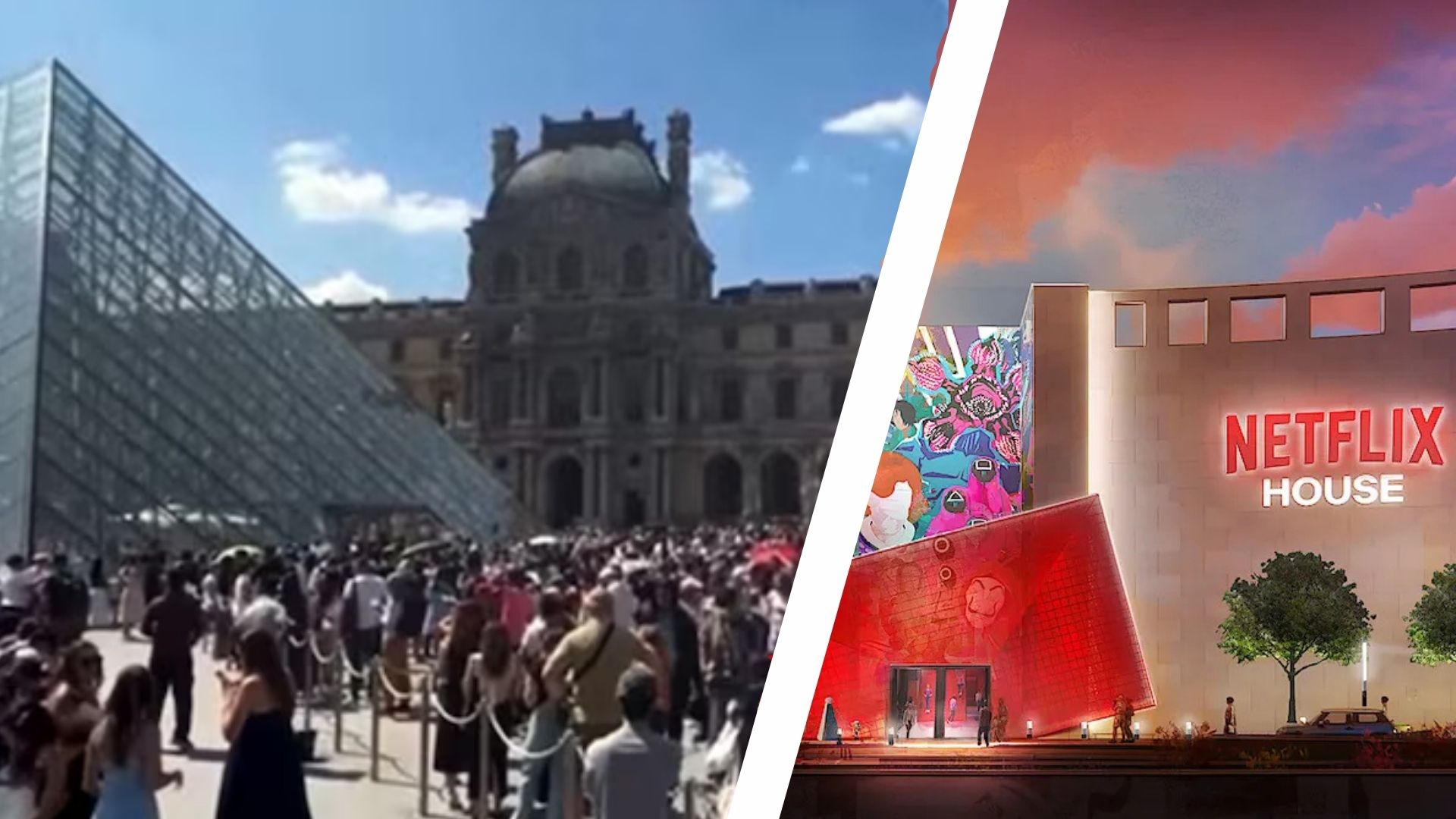
The Louvre closes due to over tourism, and Netflix announces themes for its first FEC.

 Apple Podcasts

 Spotify

 Castro

 RSS Feed
The Louvre’s staff closed the world’s most-visited museum with a snap strike, blaming “untenable” crowding and a 20 % cut in state funding even as attendance soars. Philip and Scott pull three operating fixes every attraction can steal now—hard capacity caps, timed-entry tech, and reinvesting in on-site teams before adding the next wing—because a six-year master plan won’t save a gallery that melts down tomorrow. Across the Atlantic, Netflix unveiled its first Netflix House venues—permanent ticketed centers built around Wednesday, One Piece, Stranger Things, and Squid Game. The hosts explain why Netflix needs brick-and-mortar revenue as YouTube does to streaming what streaming once did to cable, and what that means for parks that suddenly share a lane with a $200 billion content giant. Bottom line: cultural icons must treat capacity as an asset while digital titans rush to monetize IP in the real world—collision is coming. Listen to weekly BONUS episodes on our Patreon.
0:00 From our studios this week in Los Angeles in Tampa. This is green Tag Theme Park and thirty. I'm Philip. He is Scott Swanson of Scott Swinson Great Development And on Green Tag we break down the top theme park news each week and explain white matters to business professionals. And this week we are covering the third act in the Louver. Drama, which is what I will be calling it from There we go, There we go. Yeah, it's so funny. So we we've reported on challenges. I think challenges is fair that the Louver has been facing and this is the this is the the Paris Louve, not the not the Abu Dhabi Loof. But yeah, it's uh, well it's become very it's become very dramatic.
0:44 It is so great. I'm just and it's so French. Also, I mean, I'm sure it's. It's like because just because I like it. But I also it's one of those things where I'm like, I don't know if this would happen, you know, in America, definitely, but. So it's been going in a mare. Who knows what would happen in America. We just don't know that as true. That's also true. That's a good point, Scott, though we do know that in the last several episodes we talked about the background for this, which is background is so here. I'll let you recap act one the Loopes Act one. Act one is that after the pandemic there was revenge travel and also due to more interest in international locations that are not necessarily the USA, you have seen a like spike in visitor attendance at the Loup. And we're not talking like five extra people. We are talking double the capacity that these rooms were meant for. We're talking twenty thousand people trying to see the Mona Lisa every day.
1:43 You know, we're talking just a lot, like an incredible amount of what the infrastructure is not meant to contain. And so that was sort of act one. Act two was that there was a like leaked memo, like quote unquote leaked memo from the director of the Louver and it leaked out to the press, but it was it was from the director being written to the government and basically the director outlined all the terrible things that was like there's damage to the infrastructure that the bathrooms, like the staff just can't can you know, keep up the upkeep and also make it habitable for people and all this kind of stuff. And then at that point we covered the plan and Macron had a plan, right. The plan was basically we've done and talked about it where it seemed like politically he didn't want to try and like appropriate money for the louver, and so what he did politically was like basically put announcers going to there was gonna be a tax on visitors, like a you know, a fee to visit them, like extra fees to visit things that residents would be exempt from. And then he would they would collect those over the next six years ish and use them.
2:58 To renovate the building. And then what happened was now we're to Act three, which is that the staff did not like that. So so basically they went on strike, which is great. I just think it's great from a just I mean, you know, it's a bad situation. I think it's it's a legitimate way to kind of help or to bring attention back to it. But basically they just said, we can't wait six years for help, basically, and they said that they called his plan, they say, the seven hundred to eight hundred million euro plan renovation plan was hypocritical and it masks a deeper crisis because while Macron is investing in new entrances and exhibit spaces, the loose annual operating subsidies from the French state have shrunk by more than twenty percent over the past decade, even as as I mentioned, Busard numbers of sword. So they're kind of pointing to a systemic problem, which is that there hasn't been investment to match the amount of additional attendance that is coming in, you know, and that they can't wait six years.
4:01 But in fact they have reduced the support as the attendance goes up. It's not even they're not even holding status quo and they're not adding more more financial support for additional visitors. They're actually going down. They're supplying financial support for additional visitors. Yep. And so they're basically saying that the chronic understaffing and the situations there with the ticket agents and the security just everything is just untenable, is what they're saying. And if you look at the pictures in the piece that from the Associated Press, I mean the lines and these I mean, it is it is crazy like to see that I mean it, it does look really bad, and so I'm not sure the reality, of course we're not there on the ground, but the pictures are pretty look pretty bad. But so yeah, the Love temporary closed because the staff went on strike, and whether or not it's going to reopen or reopen importions is TBD as when we're recording this and then to see how how the long term stuff.
5:07 Will work on it. But they this actually the AP brought it into context for that area that across southern Europe that this is not the only anti tourism protests happening, that there were thousands rallied in Venice and Libson and beyond denouncing an economic model they say displaces locals and erodes city life, and Barcelona activists sprayed tourists with water pistols, a theatrical bid to cool down runaway tourists. So that is we talked about that last time. Also because Japan, of course, we had covered previously how Japan was like putting up new fences and kind of like having to put up signage and do things that they didn't normally have to do because the visitors didn't have the same sense of care that the locals did. For some of their historic properties, and that they're putting capacity limits and prices, and so this seems to be sweeping across a lot of the areas.
6:02 We're not seeing it here in the US, or I have not seen anything about any of it here in the US. But well, and you know, there are many countries who are saying don't come to the US right now. So there's that, yes, there's that. There's but it is an interesting thing. We talked about the trend last time, where Scott and I I think advocated that tourism writ large is a good thing, but infrastructure, especially what Scott said about creature comforts, is also a good thing. And it's definitely about having the balance. And I think we we as tourist and professionals, can't take for granted. I think that all of the folks in these situations also no, you know, they're not necessarily tours and professionals that have the same background that we do.
6:45 And or even if we think. About Scott's background in managing amount people for a large facility, like you don't necessarily have that if you're the guy who's in charge of bringing up, you know, the tickets and stuff at Mountain, like, that's not necessarily in your background. So we talked about last time how that could be part of it. But this is definitely an escalation, and I just think it's funny. Well, and it's interesting because I think that you know you're right, this is this is creature comfort. But this is creature comfort both for the guests and for the employees and for the team members. That is being that has has gotten to the point where it needs to be fixed, and it needs to be fixed sooner rather than later based on what we've read. Again, as you said, we're not boots on the ground, so we can't we cannot advocate for this based on first person experience. This is sort of trying to read between the lines, I guess and figure out, you know, what is what is really going on. Suffice to say that it was to me.
7:48 To me, the thing that is most interesting about the Love specifically is it's it is, and I think Philip alluded to it. It is the current plan is a white wash up to cover up the fact that they have been reducing quietly and slowly reducing funding. Now, the next question is, if the Lover is so popular, what's happening to all of the money generated by that popularity, is that it is the business model such that that is what they need just to keep their head above water. Because if that's the case, there's another problem. You know, having worked with both profits and nonprofits, I am a firm believer, and there are nonprofit organizations that will disagree with me, but I am a firm believer that a nonprofit should operate as though they are for profit and use their nonprofit status to continue to use it towards R and D, to continue to develop, to continue to grow.
8:47 And I will say, based on my experience in working with nonprofits, if you're looking for grant money, not necessarily government grant money, but grant money from sponsorship and from corporations, And that's thing. Corporations want to see that their money, their investment, is going to be utilized to its best possible outcome. So they want to see that you know how to run your organization. They want to see that you are focused as much on the basic infrastructure as you are the sexy new exhibit or the sexy new ride or whatever that is that's going to come up in the future. So there is a balance here, you know, I know you are thrilled by the fact that they've gone on strike and you think that's really fun. Having spent enough time on the other side of that, I think this is a I think this is a very sad situation because basically, and maybe I'm wrong, but what I'm hearing, because we've seen the leaked memo in act too, the management of the Loop are stuck between a rock and a hard place. They don't have the funding that they need, primarily from the government, and they have very disgruntled staff. So you know, when we say quote unquote leaked, that kind of makes sense that that got out, yep, so that it would light a fuse, you know, it would it would force some some hand. It did force
10:18 some hand, which was the let's do taxes. Let's you know, let's basically add tariffs to people visiting the Louver and. We'll see how. That pans out. And the idea of we can't wait six years. That's that's where I think there's a little bit of a a questioning, you know, is this, would it be possible, for example, for the government to reevaluate the budget for next year so that they could start getting that funding in and then utilize the additional tourist tax for lack of a better description, the additional tourist tax, to then bring that money back into their coffers so that we can get the apparently very very much needed improvements made so that the guest experience continues to be something special, continues to be something desirable. And you know, and I'm sure that there's an argument people sitting out there going, but wait, they've already got people breaking down the doors, They've already got twice capacity. Why why is that even a concern? Because eventually the pendulum will swing back the other way. Eventually people will go, yeah, we went to the Louver. It sucked, it was horrible. Yeah, we didn't get to you know, we got to we got to one gallery. We had to wait two hours to see the Mona Lisa, and that even then it was across the room of crowded people because the Mona Lisa kids is not that big.
11:49 People are saying that there's some people in the story actually quoted that are being like what you see when you go into mon Lisa's elbows and cell phones. You don't see the Mona Lisa, right. And a posting vamp on the other side of the room. Yeah, so I'm wondering what do you think about changing the capacity, because apparently there is currently a like a capacity as in like a whatever. I think it's they've set it. I think thirty thousand is already a limit, like they've already set a limit on daily attendance. I guess my question is what about dropping that to where it's actually supposed to be, which is fifteen, and then just saying just like dynamic pricing in a way right where you're just saying, look like it's fifteen.
12:34 So the Disneyland model, Yeah, just be. Like it's max fifteen and you get therapy times where it's more expensive, Like like, why not in this case because of the urgency of the situation, why not put that effect and then that could affect real change immediately for the staff members. And it's and there's got to be I'm not sure about how it works in France, but like you know, if the room was built for X and you're putting why in it, it seems like there's also a danger just in the amount of people in the room for fire code and for evacuation. So I mean it seems to me like those things I'm curious about, like why if they already have a capacity limit or you know, a restriction on the number of tickets sold for a day, why is it so high and why aren't they they just take that down? Is it?
13:25 Yeah? Yeah, I have no idea what that what that number is based on, you know, it's I don't know, I don't know. Whether that is. It was set at the first number because they felt that would make a good guest experience. Then when they realized we have people knocking down the doors and people get you know, if you let fifteen fifteen thousand and thirty thousand, you know, you were letting in thirty thousand, and then you cut it down to fifteen thousand, then you have fifteen thousand complaints? So is that more negative? You know, it's it's all one of the. Things that I if you get nothing else from this show, one of the things that I want you to remember is there is no silver bullet. There's no magic bullet. That is just one way to go and it makes everything right. It's always a balancing act. It is always a balancing act. So is there going to be more complaint, more negative publicity generated from reducing the number down and increasing the price, whether that's through dynamic pricing or just you know, we're gonna let half as many people in and we're gonna double the price. You know, that's the simple math solution. I like simple math because I'm not very good at it, but that's the simple math solution.
14:36 Is that going to create more negativity than keeping letting everybody in but making their experience less than it should be. I don't know the answer, but these are all the kinds of questions that they need to be having right now, because you know, even because so I was in Paris ten years ago, twelve years ago, and we didn't go to the loof because you it was even back then it was too crowded. This is pre COVID. Even then, we couldn't get in day of because I was only there for a day because I was on a cruise ship. But we couldn't get in, so we opted not to go to the loose. So this is not a new problem. That's the thing that I think is frustrating.
15:17 This is not new. This is something as you know, even in the short time that we've been reporting it, it's already now had three very dramatic acts and it's one of those situations that has been going on for at least ten years. So I. Like some of the solutions. I mean, I'm not opposed to the tourist tax. I'm really not. I think if because one of the things that we have to recognize, and I think this goes back to some of the other anti tourism stories as attractions. As organizations, Yes, we have to generate revenue and we have to draw tourism because that will help our hoteliers and our restauranteers and the local mall et cetera, et cetera, et cetera. But we also have to be cognizant of the community and the neighborhood that we operate in, because the moment you knock that relationship to the ground, then you've got all kinds of other trouble. So you know, to to just put on a flat tax for everybody. We're just going to do an amusement tax or a museum tax or whatever you want to call it that applies to everyone.
16:23 Then you're not being you're not recognizing that the locals who have supported you for all these years are now getting their handslapped because of something that's completely out of their control. Which is the additional tourism. So I think what you're saying a little bit is that Macron's plan had elements of it that were good because it was yea was directly it was only taxing the people who are not local. But on the flip side that it was too long because of that reason, because it you know, because it's not taking funds immediately and it's doing other things. It's taking too long and so therefore there is no operational adjustment. Correct. So I think you're saying too far.
17:04 Down the well to have a six year plan. They need an immediate fix and then a six year recovery. Yeah, they both. So he needs to work with the local operators to be like, how can we adjust this but also make a six year plan. Think of it as taking out a mortgage on a home. You know, there are different cultures buy homes in different ways. Some people some cultures live in live with their parents, or live in very small homes until such time as they can buy a home outright, so it takes them twenty years before they can buy a house. More common in the United States is the concept of mortgage. We will get a you. Know, someone to buy the house up front in essence, and then we'll pay back the mortgage company with an interest rate. To me, because this sounds like it's already gone way too far down the well. To me, that seems like the only solution is to basically say, okay, here's our bailout money, and we're going to use these taxes or these budgetary changes to pay us back for solving the solution.
18:08 Now. Yeah, yeah, if you think of it like a business, they should be able to get a loan based off of the current demand, right basically, well, or. Just rebudget I mean I make that sound overly simple, but just reevaluate, reevaluate the budget. And is there a way, you know, when when one house is on fire, you don't put water on the entire neighborhood. Let's figure out a way to take all of the water that's being spread over the other organizations and really focus it in. Now, will that upset other organizations? Yes, short term, But that's you know, that's why I say there's no one I sit here very smugly and say, well, this is what they should do, but there is no one solid answer.
18:48 These are options that they should be discussing and hopefully find something that works best for their specific situation. Yep. Well, moving on, let's our second story. Here is also an update for something we covered previously, which is the Netflix Houses. So previously we talked about how I think we've talked about this for years. I think about how the concept of Netflix, basically basically Netflix, over the past many years, has been experimenting with in person experiences. We know that obviously there's horror Nights, and there's those part where they've worked with partners, but there's also where they've made their own experiences, and mostly these are pop up stores. The ones I've been to were mostly the Stranger Things pop up stores, where it's more it is a themed experience, but it's like a themed shopping experience, right and so earlier or I don't remember when, whenever this was announced, we talked about it on the show, and it was the concept that they're making kind of like an fec basically, which is called Netflix House, and we weren't sure what it was going to look like at the time, but we assumed that it was going to be a collection of these experiences because they already have tested them effectively in other places and just bringing them together makes sense, and so news came out this week that I think that's sort of what's happening, but I'm still not clear. Basically, Netflix House will open in twenty twenty five and Philadelphia and Dallas, followed by a third venue in twenty twenty seven in Las Vegas. The Philadelphia location will include attractions
20:22 based off Wednesday and One Piece, and the Dallas kind of part will feature Stranger Things and squid Games. Netflix announced to lineups on June seventeenth, So it was just this week, and there are pictures out that kind of show sort of blueprints or mockups, I would say, and from the mock ups, I'm just I can't really tell because I. Just pulled it up and I'm looking at it, going, oh, this is a little tricky. Yeah, so I'm not sure. You know, it looks cool. It definitely looks cool. It looks large, and of course these are larger than they were previously. The only other interesting things is an article here from A Trash's magazine points out that both of these venues are in one one hundred thousand square foot department stores at two highly frequented malls. So I like again, we liked the story originally, I'm just unsure of what it's going to actually be like, and I still can't tell from these renderings even though we have ips. I think I like the idea. I don't want to go on like a huge ransom. But I was talking to somebody recently, no one's going.
21:38 To stop you. I don't know if it's commentary so to put it in context, And I was explaining this to somebody recently as I was ranting about my low YouTube ad revenue. But I was saying that basically, for the first time last month, for the first time ever, streaming surpassed cable and TV viewership in America, which I think, depending on your generation, you're probably surprised at on either end of it, right, you're probably surprised at that, and you know, so it's interesting that what pushed it over the edge was retired folks, as older folks moving from TV and cable into watching YouTube, and YouTube has now become a more washed streamer than Netflix.
22:24 And I think many times people don't realize that YouTube is a streamer in the same way that Netflix is. It really is, and people they watch YouTube on their TVs, and this is what is pushing this number over and so all of the places we talk about in the entertainment are kind of in this battle, even though we don't realize it right. Comcast is in this battle because as people cut cables, it impacts its bottom line, which impacts its ability to get capital to put into new theme parks and all that. That's why they've been rushing to diversify, et cetera, et cetera, et cetera. But Netflix and YouTube are also all interwheuned into this, and to me, I think that Netflix, in a way, YouTube is doing to Netflix what Netflix did to cable TV because YouTube, the cost of content on YouTube is less than half of what Netflix spends for its content, and we've already talked about how Netflix is spending less than other people.
23:18 So it's this huge race to the bottom. And it's because effectively, YouTube only pays for content if that content makes money, and then even when they pay for it, it's only an advertising split. So you can have a creator like us, even on this channel, where we are making years of content for YouTube, but we don't get paid for it because we have to reach a certain threshold, and that threshold is pretty high. So there's that base level. But then even when we do get paid, we only get a percentage. So basically it's like someone going out and saying, you're going to produce the content and I'm going to sell ad space on it, but I'm only going to give you money if I sell adspace, and so then you're making this asset for years.
24:00 So it's just a much cleaner I mean, it's a they're making. The business model is just entirely different versus Netflix. It has to invest every year in new content or they lose subscribers or whatever. They have to spend the money. So I think you're going to see that erosion of Netflix's base in that, like Netflix, it's just a worst business model when when people are just when there, when so many people are willing to make so much content for basically for free or for very little money on YouTube, then that puts Netflix in a bad place because they have to pay for their content unlike YouTube. Okay, that's the background, so similar I think to what Comcast is doing is Netflix probably sees the right on the wall and they're like, oh, our business model is eroding because just you, YouTube can scale infinitely basically and you and Netflix cannot and yes, while there's always going to be the appetite for HBO, there's still HBO and that's that's that's the other problem is that they're almost crunched from both angles, right, And so I think this, similar to what Comcast is doing, is a play at diversification. They look at Disney, they look at Universal and they say, oh, we also have incredible IP and look at Disney's flywheel that makes them so much money. And the theme parks are have a better valuation than Disney plus and they hear everything that's going on there and they're probably thinking, what if we made theme parks and we made a flywheel based off of our good ips and the same thing.
25:26 We could invest less in better ips, just like Disney talked about with Marvel, less in better ips, and then if we had other forms of revenue that would lead to better revenue, and if we could attack markets that are less, you know, that have less competition, Like they're not going into Los Angeles or Orlando, right, They're going into places that last and Dallas and Philadelphia, right, which have great markets, and I assume great viewership numbers, great percentage of viewers, but also they're not competing with the Disney or Universal except for the kids or maybe in Dallas. So I think that's what this is. This is a larger This is a larger competitive play that is about diversifying their revenue before it is too late, in the same way that Comcast is also trying to diversify before it's too late. And I think it's a very similar model even to some of the stuff that we've seen from Universal and that they're trying to make an fec of some sort of thing where they're collecting interactive elements based off of the different eyeps that they have, And as I mentioned before, how well or not this will do is going to really come down to the execution, just like with Horror Unleashed, Right, It's like what it they've shown that they're putting in a place that has high foot traffic natively, and then they've chosen very popular ips like one Piece Grow incredibly popular. We talked about this last time when we talked about the Universal FanFest nights.
26:52 So they've chosen popular eyeps and they put them in locations to gather foot traffic. I'm not sure what else they could do. Really kind of like they've set a really good age. Now it comes down to the execution and their team and their research, and Disney was not built in a day. That's the other thing we just talked. We didn't talk about it yet, but the concept of epic universe. You know, theme parks take like a decade to really get into the groove of what the park is going to become and flesh out all the experiences. And I'm not sure that Universal or Netflix understands that that there's a time Anyway, I'm done, Scott. What I think is interesting? No, I agree with a lot of what you said. I think what I think is interesting about this particular story is, you know, they're they're going. First of all, they're utilizing they're utilizing these old anchor stores quite honestly, Yep, they're they're so they're going in and they're probably getting the space for pennies on the dollar because these anchor stores used to be what pulled people into these males and King of Pressure Mall in Philly is huge or what huge? Yeah, it was at one time.
28:00 And it's iconic too, right, that's a thing iconic. Yes, I've been going there, so I have family in that or had family in that area, and I've been going to that mall since I was six years old, so it's yeah, And it used to be it used to be a destination location when I was little, so it does have that iconic status. So my guess is the mall owners are looking at it going, oh, here's a way we can pull people in, which, first of all, I think is way overdue in so many other locations. I know whether they've tried it in different different spots here and there, but finding a different, a different way to utilize those gigantic anchor stores is I think going to be imperative to the brick and mortar world that we used to live in. So I think that's I think that's great. I think that's probably working to their advantage because they're they're getting they're probably getting this these spaces for significantly less than they used to go for as a retail. Because the mall owners are thinking, here's Netflix, They're going to bring in a gazillion people, and all of our other stores are going to do well so they can stay in their lifecasions. I think that is important to address. I agree with you one hundred percent on it all comes down to execution. I'm hoping that the execution includes creature comforts because in looking at in looking at the maps, they seem even though they're one hundred thousand square feet, they seem tight, and they don't seem to have a very natural flow to them. It almost looks like a series of escape rooms.
29:26 Is the vibe that I'm getting. Now, again, I have no idea, and I may be way off, but it almost looks like a series of escape rooms where you'll do one ip, than the next IP and the next ip. The problem there is what if I don't care about the second ip. So we'll see, and again I may be wrong, there may be a central hub in this space that I'm just simply not seeing. Kind of hope there is, because I think that would be beneficial. And then finally, the thing that you hit on that the moment we started talking about this particular story, it was exactly what I thought is, they've looked at Disney. They've seen that Disney, no matter how much they try, their streaming is not performing the business model for their Their streaming business is not nearly as impactful or not nearly as profitable as their parks. So they're going we're leaving money on the table here and you know as YouTube, which I'm sorry, sorry content creators. I really hope that YouTube does not put Netflix out of business because I can only watch so many reality based content. I don't want to watch your recipe for how to make a caterpillar cake. But we need higher in production. We need higher in production than is willing to go on YouTube for free. So I'm hoping that that's not complete. I'm hoping that we do have some sense of quality. Don't misunderstand me. I have lots of content creators that I follow, Philip being one of them, lots of content creators that I follow. But I am hoping that as we move forward, we find that there is a place in the market
30:56 for all these things. And I think that Netflix is doing that by saying we're not just the big blockbuster things on TV, where the big blockbuster things you can walk through, where the big blockbuster things that you can participate in, interact in, and it will continue to build a stronger audience for the content that they are indeed creating the high end, you know, studio quality content that they are creating. So well, speaking of high quality content, this is about all the high quality content we can give you this week because our time's up, so on behalf of Philip Bernandez and myself Scott Swinson. This is Green Tag Theme Park in thirty and we will see you next week. Unless you're going to tune in, you're one of our followers, one of our subscribers on unhinge, and then you can go watch that and listen to us rant and find out what we really think

For over 30 years, Scott Swenson has been bringing stories to life as a writer, director, producer, and performer. His work in theme parks, consumer events, live theatre, and television has given him a broad spectrum of experiences. In 2014, after 21 years with SeaWorld Parks and Entertainment, Scott formed Scott Swenson Creative Development. Since then he has been providing impactful experiences for clients around the world. Whether he is installing shows on cruise ships or creating seasonal festivals for theme parks, writing educational presentations for zoos and museums or training the next generation of attractions professionals, Scott is always finding new ways to tell stories that engage, educate and entertain.
CEO of Gantom, Publisher of Haunted Attraction Network
Philip is a journalist reporting on the Haunted House Industry, Horror events, Theme Parks, and Halloween. He is also the CEO of Gantom Lighting and Founder / Publisher of the Haunted Attraction Network, the haunted attraction industry's most prominent news media source. He is based in Los Angeles.